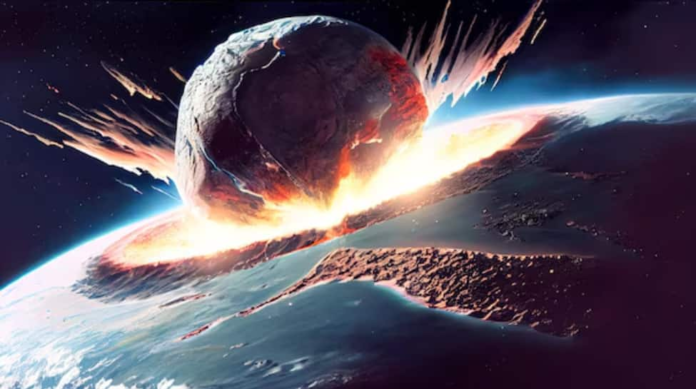
3.5-Billion-Year-Old Crater Discovery: A groundbreaking discovery in Western Australia’s Pilbara region has rewritten Earth’s impact history, as researchers at Curtin University and the Geological Survey of Western Australia have identified the world’s oldest known meteorite impact crater.
This ancient impact site, dated to 3.5 billion years ago, predates the previously known oldest crater by over a billion years, offering fresh insights into Earth’s early environment and the role of meteorite collisions in shaping our planet.
A Cosmic Collision That Shaped the Earth
The team identified the crater through distinctive rock formations known as shatter cones—structures formed under immense pressure during meteorite impacts. These formations, found 40 kilometers west of Marble Bar, indicate that a meteorite struck the area at a staggering speed of 36,000 km/h, creating a crater more than 100 km wide.
The immense energy released by the impact sent debris across the globe, altering the planet’s surface and potentially influencing atmospheric and geological conditions.
Did Meteorite Impacts Help Life Emerge?
Professor Chris Kirkland, a leading researcher on the study, believes such ancient impacts could have played a crucial role in shaping Earth’s environment. The extreme heat and pressure from these collisions may have created hot water pools and hydrothermal systems, which are thought to be essential for the emergence of microbial life.
Additionally, these powerful impacts may have contributed to the formation of Earth’s crust, influencing the development of continents over time.
A New Chapter in Earth’s Impact History
Published in Nature Communications, this discovery highlights the significant role meteorite impacts played in shaping our planet. It also raises the possibility that many more ancient craters remain undiscovered, waiting to provide further insights into Earth’s formative years.
This breakthrough is a major step in understanding how celestial events have influenced our planet, urging further exploration into Earth’s hidden geological past.